A furnace that starts successfully can still have an intermittent fault, restricted airflow or a developing combustion problem. Before winter increases heating demand, technicians need a repeatable diagnostic process that connects symptoms with measured evidence.
These five checks focus on gas-fired, forced-air furnaces. Procedures vary by model, so use the correct service manual, suitable instruments and required isolation practices. Live electrical and combustion testing belongs with qualified professionals.
1. Trace the Heating Sequence and Control Signals
Start by recording fault codes before clearing them. Confirm the thermostat’s heating request, power supplies and relevant control inputs. Follow the manufacturer’s sequence from the inducer starting through ignition, flame proving and blower operation, identifying where progress stops.
An HVAC contractor in Grand Rapids, MN should treat a fault code as a diagnostic clue rather than proof that a named component has failed. A pressure-related code, for example, may reflect a venting problem rather than a defective switch.
Check wiring and connections against the diagram. Document the failed step and supporting measurements before recommending a control board or other replacement.
2. Measure Airflow Restrictions and Temperature Rise
Inspect the filter, blower and accessible air paths, then measure total external static pressure at the manufacturer’s specified locations. Compare results with the equipment limits and blower performance data. Static pressure helps assess resistance; it does not directly measure airflow.
For an HVAC contractor in Grand Rapids, MN, checking temperature rise alongside static pressure provides useful context. Measure the difference between supply and return air temperatures under the specified operating conditions, then compare it with the furnace’s rated range.
Excessive temperature rise can indicate inadequate airflow or excessive heat input. Investigate both possibilities before changing blower settings, and repeat measurements after corrections.
3. Verify Ignition and Flame Proving
When burners light and then shut down, examine the ignition and flame-proving sequence. Check burner carryover, sensor condition, wiring and grounding using the model’s diagnostic procedure. Do not assume every brief ignition failure requires a new flame sensor.
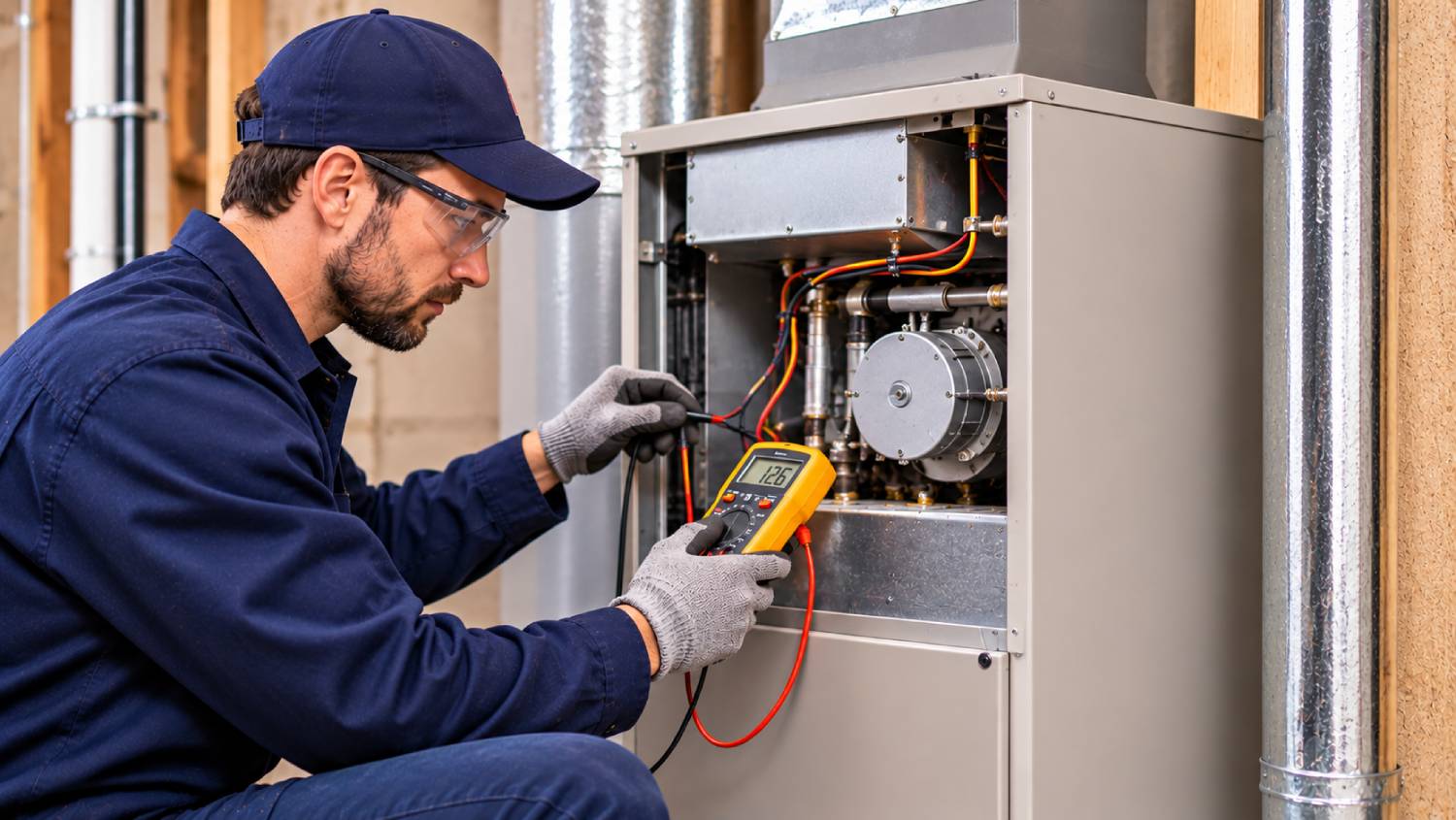
Measure the flame signal using the manufacturer’s specified method and compare it with that control’s requirements. Many systems use a DC microamp signal, but acceptable readings and test arrangements vary.
After authorised cleaning or repairs, confirm that the signal remains stable during operation. Record the result so future technicians have a useful comparison point rather than a note saying “sensor checked”.
4. Diagnose Draft, Venting and Pressure-Switch Faults
A pressure-switch fault requires investigation of the conditions the switch monitors. Inspect accessible intake and exhaust paths, pressure tubing and inducer operation. On condensing furnaces, include the condensate trap and drainage arrangement in the assessment.
Use a suitable manometer and the prescribed test points to compare measured pressure with the model’s requirements. Restricted venting, damaged tubing or drainage problems can prevent correct pressure proving.
Never leave a safety switch bypassed to keep equipment running. After correcting the underlying cause, verify normal switch operation and a complete heating cycle. Record intermittent symptoms even if the furnace operates during the visit.
5. Assess Combustion and Heat-Exchanger Condition
Use a properly maintained combustion analyser to assess flue gases under the specified test conditions. Review relevant oxygen, carbon monoxide and flue-temperature readings alongside gas-pressure and input checks. Flame appearance alone cannot establish combustion performance.
Combine these measurements with the manufacturer’s heat-exchanger inspection procedure. An unusual analyser reading needs investigation; it does not independently prove a crack. Likewise, a limited visual inspection cannot rule out every defect.
Document abnormal findings and follow the applicable shutdown procedure when unsafe conditions are identified. Explain the evidence, required corrective work and conditions for returning the furnace to service.
Conclusion
Effective furnace diagnostics combine sequence checks, airflow measurements, flame proving, draft assessment and combustion testing. Each result should be interpreted against the specific equipment’s requirements.
Record readings before and after corrective work, explain the cause of each fault and verify safe operation before leaving. This disciplined approach supports accurate repairs, effective climate control and better preparation for winter demand.